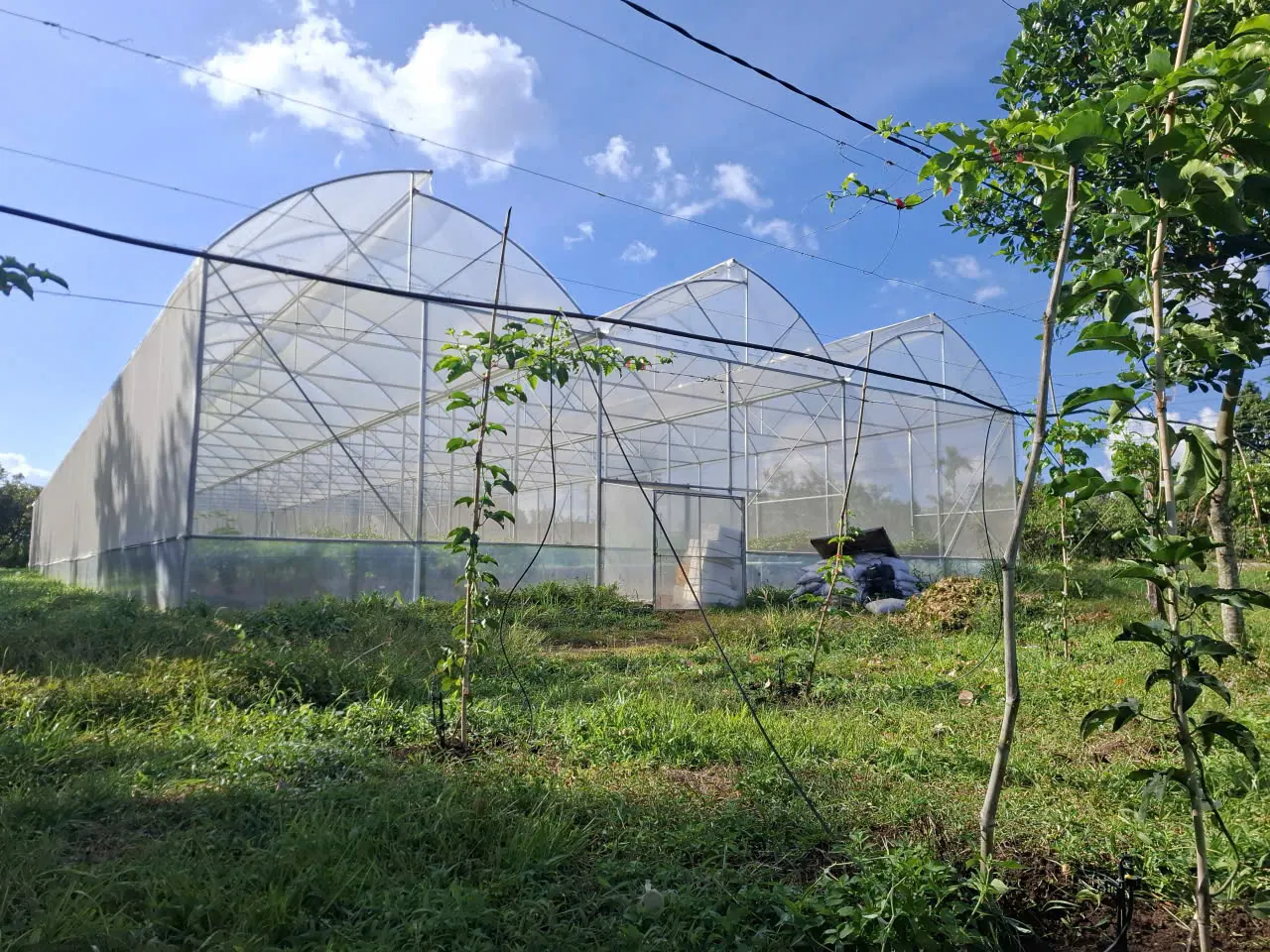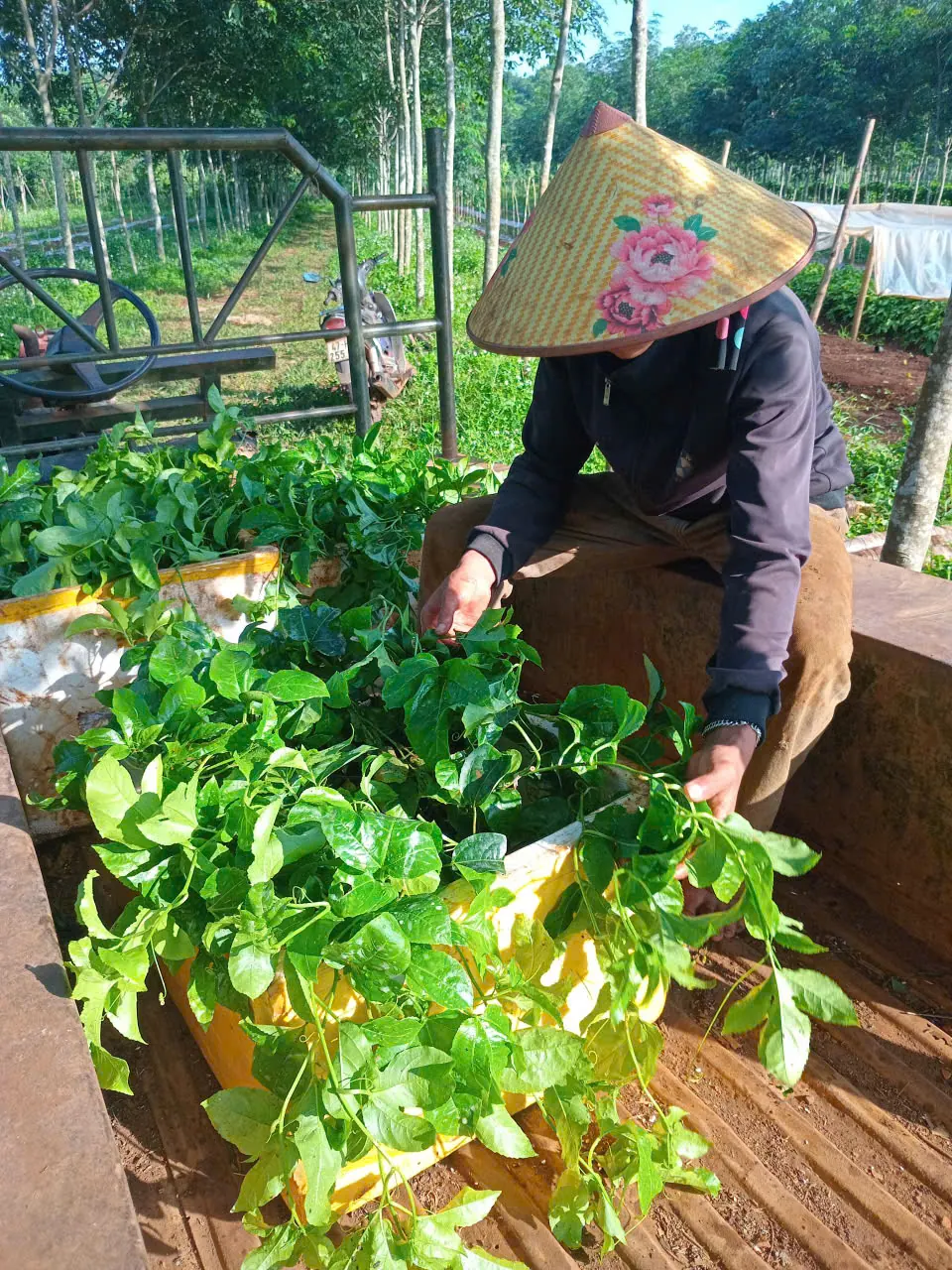
Our own seedlings
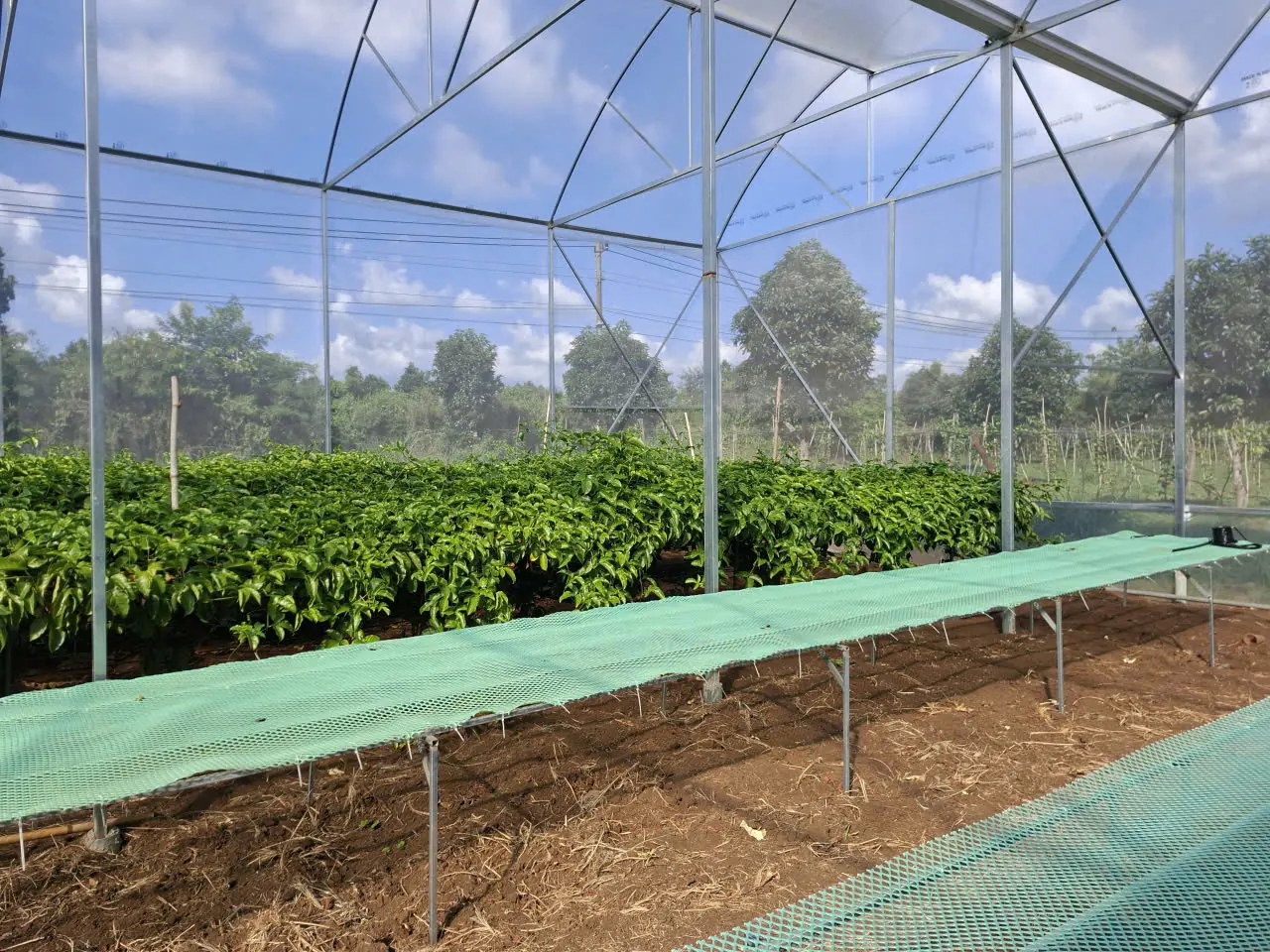
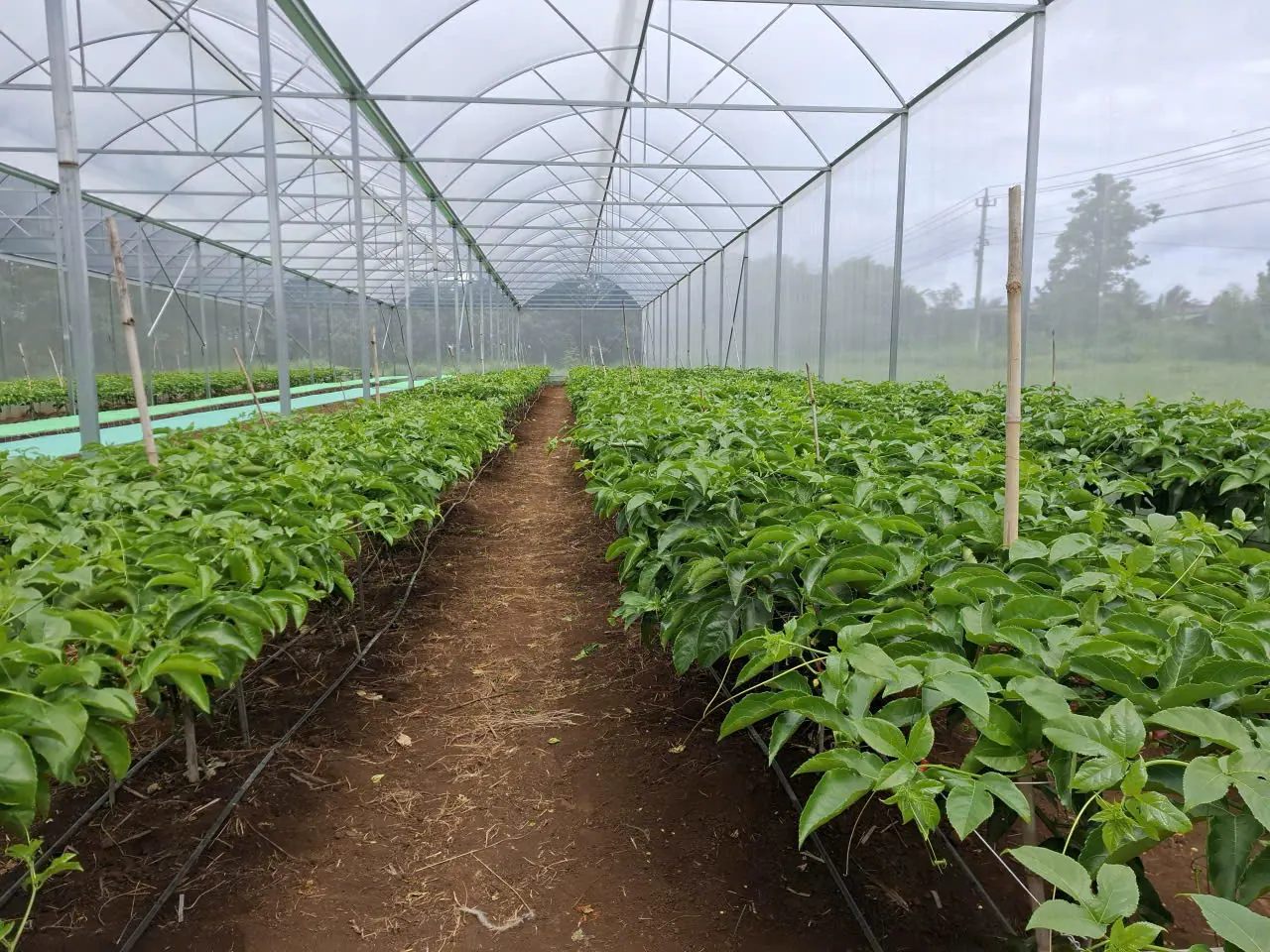
We raise our plants in our own greenhouse nursery, so we know where every vine comes from.
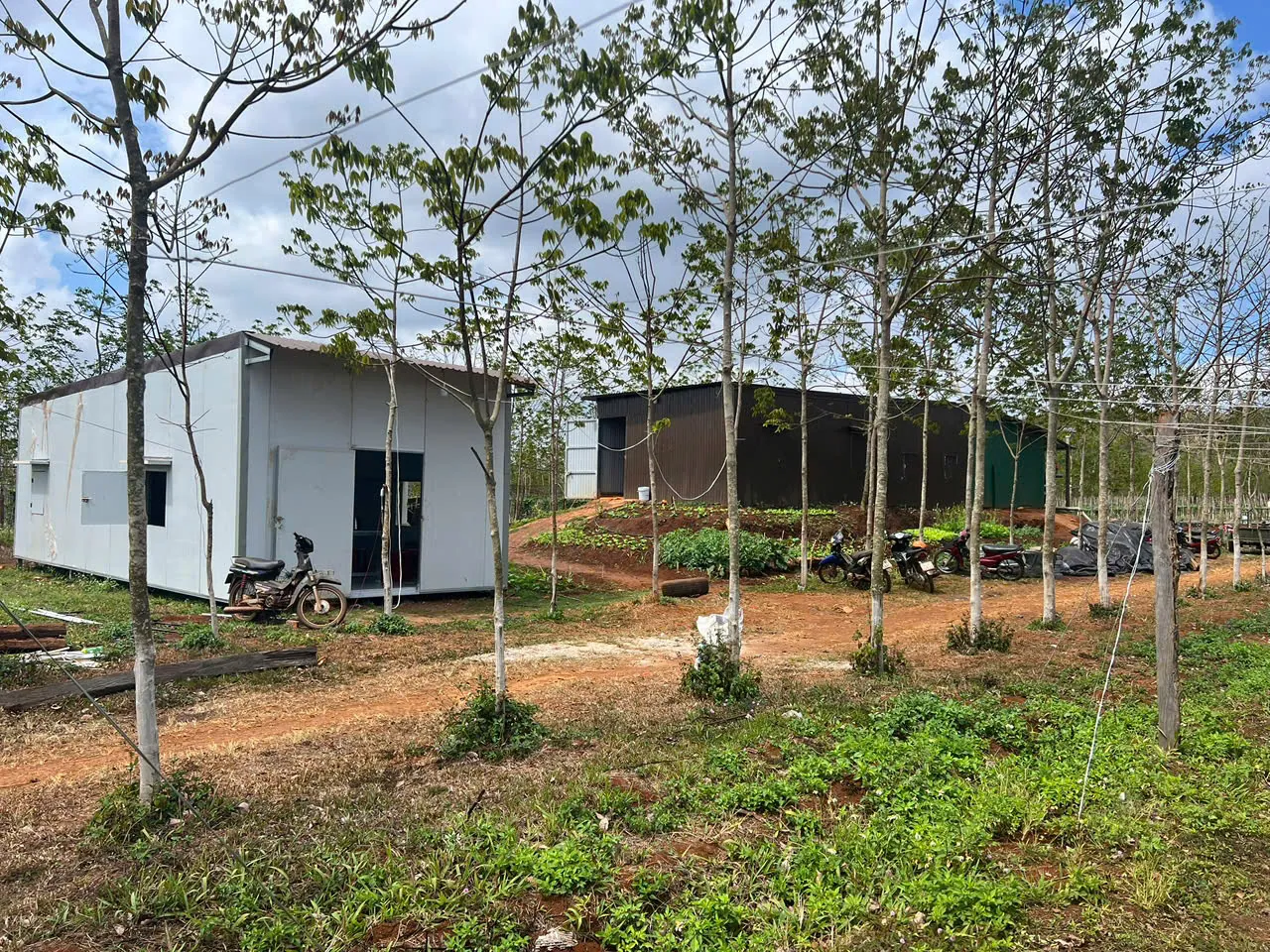
UVAVI Farm · Đắk Lắk, Vietnam
A young passion fruit farm in Vietnam’s Central Highlands — raising our own seedlings, growing with care, and opening the way to partners around the world.
01 Our story
The Central Highlands of Vietnam is one of them: deep red basalt soil, warm days, cool nights and a long rainy season that feeds the vines.
UVAVI Farm began here in 2025 with a simple idea — grow passion fruit with the patience of a farmer and the discipline of a modern farm business. We built our trellises by hand, laid drip lines row by row, and raised our own seedlings under greenhouse cover before a single vine touched the field.
Learn more →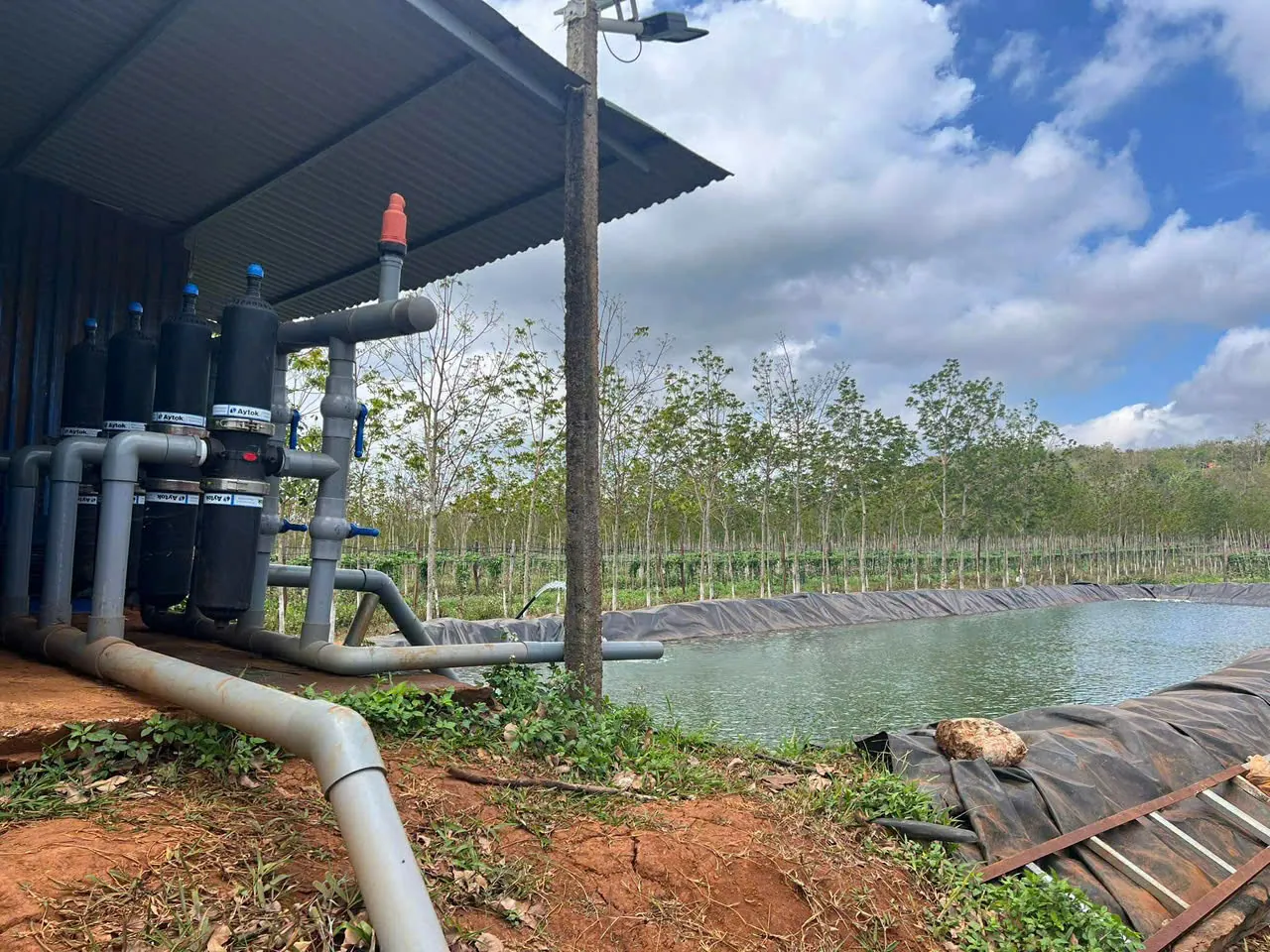
02 Produce
Three things we can discuss with partners today — and two crops we are preparing for.
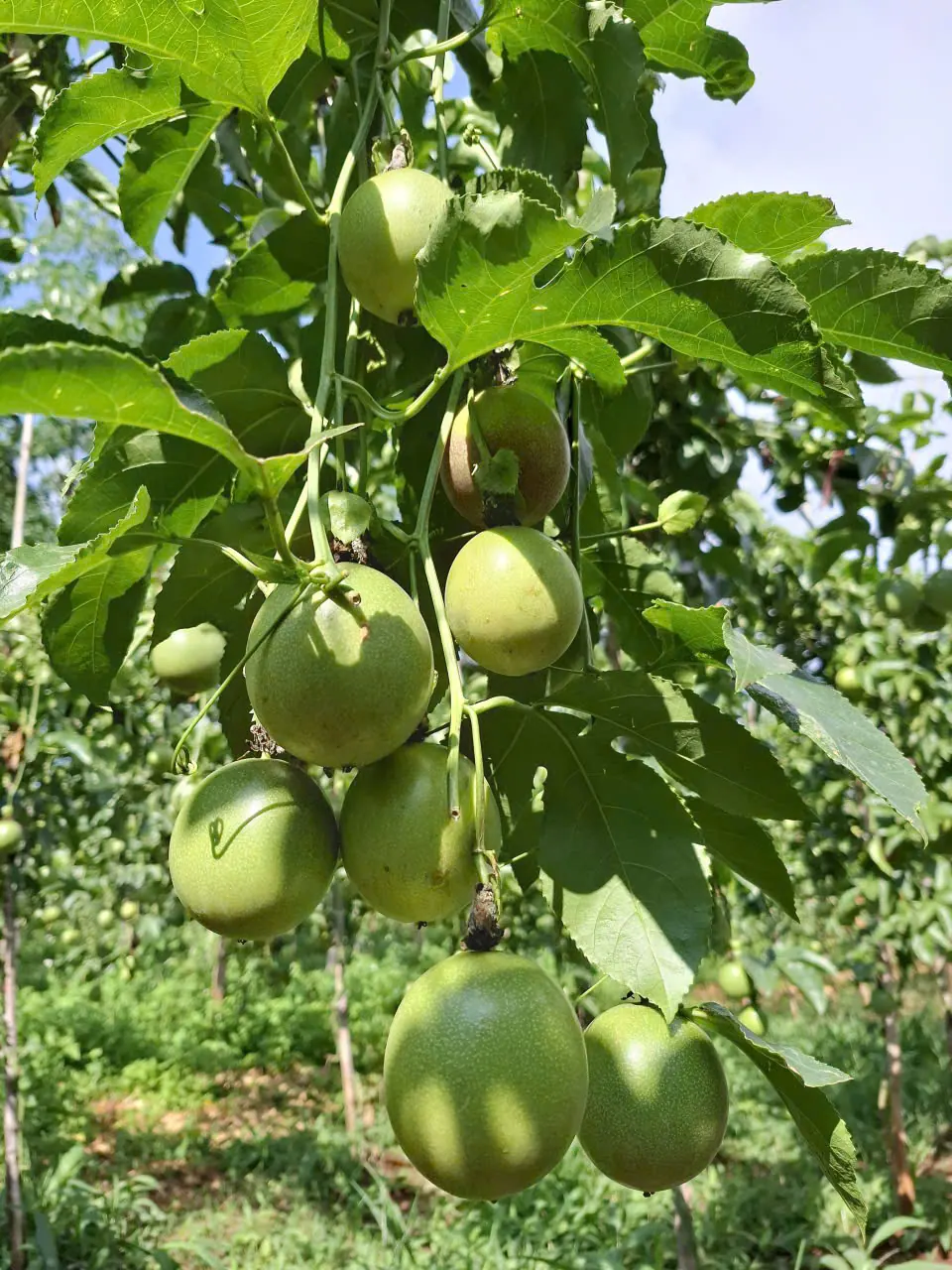
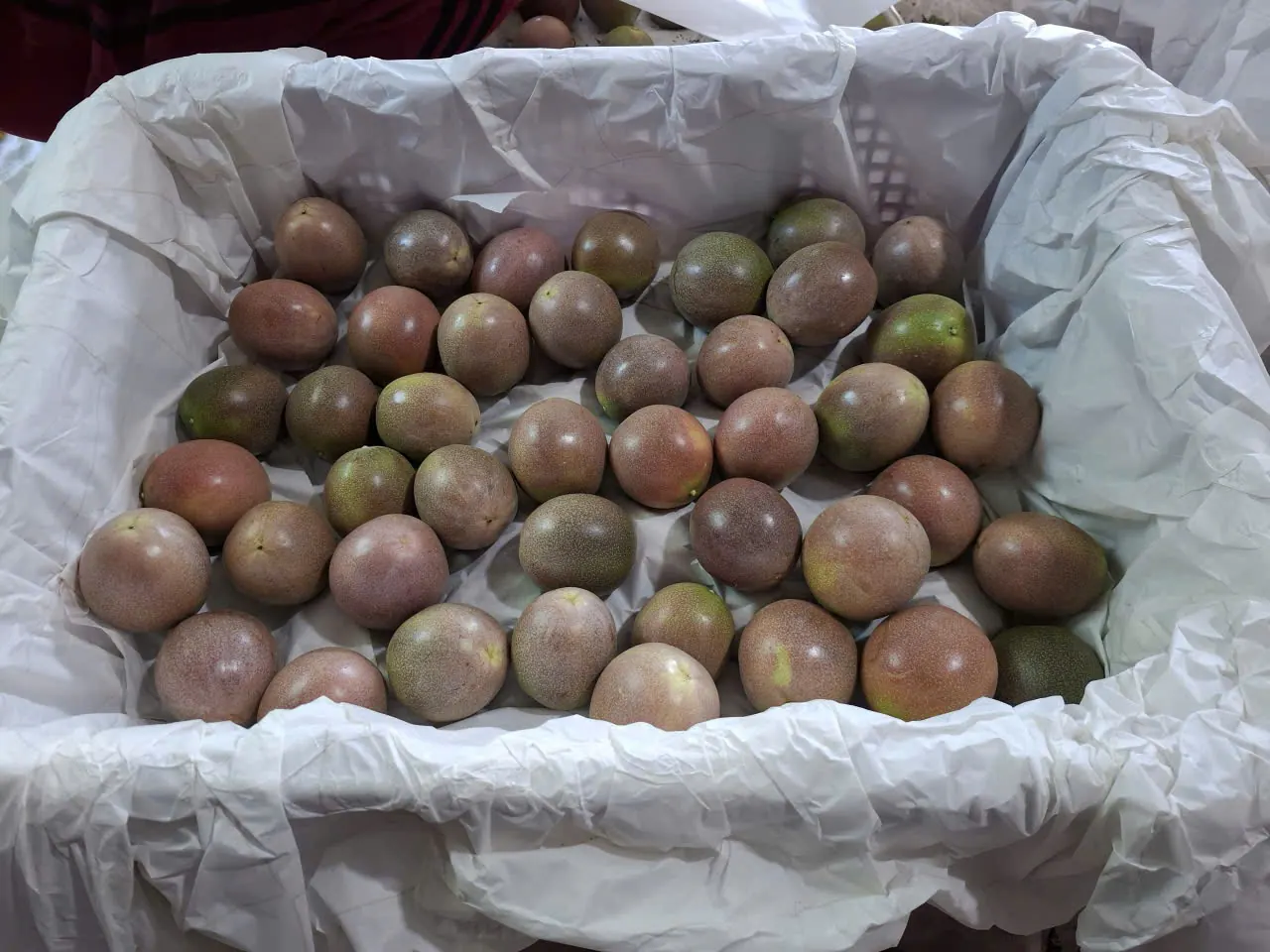
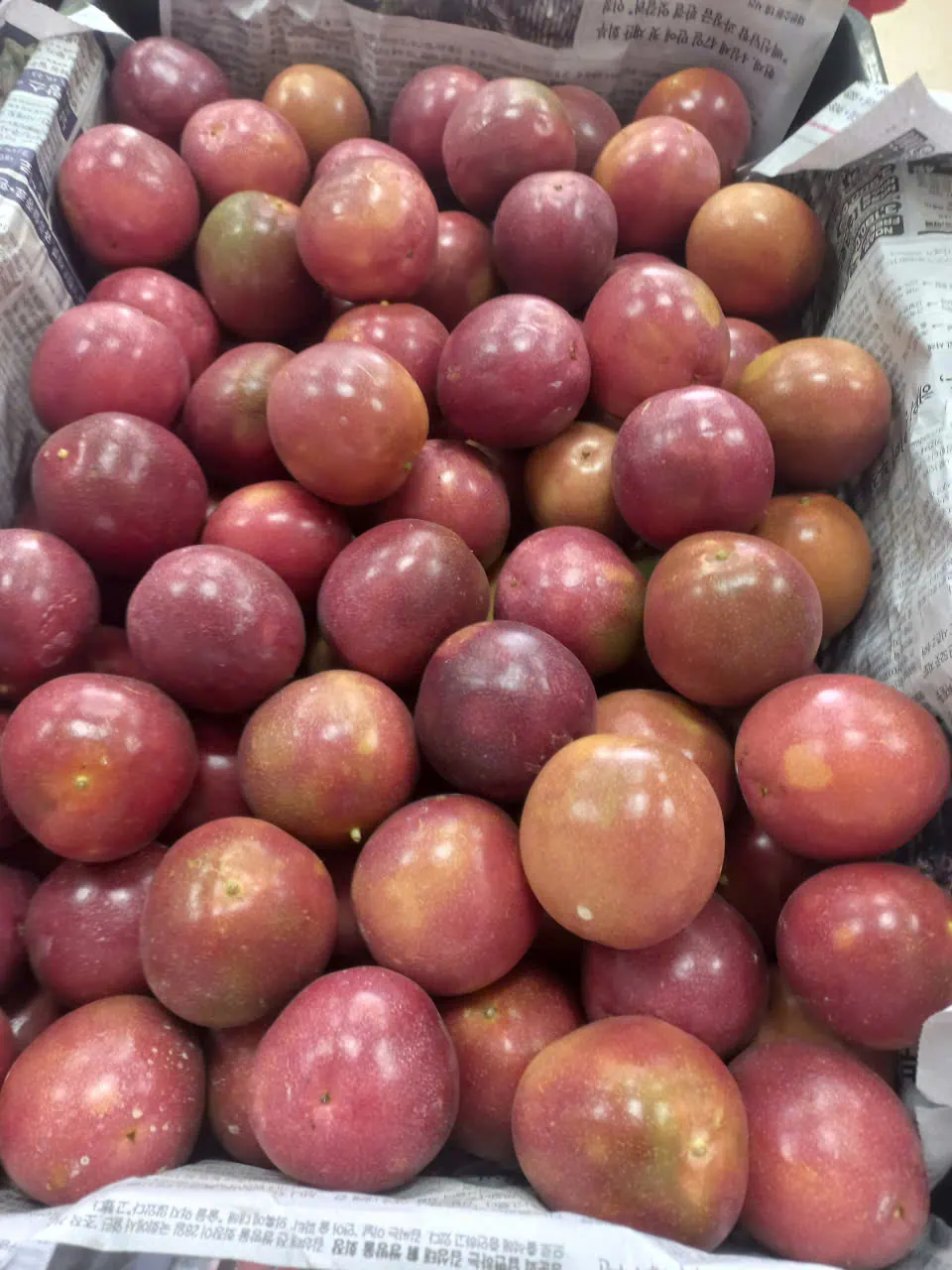 Fresh passion fruitPurple passion fruit, hand-picked and packed on the farm.
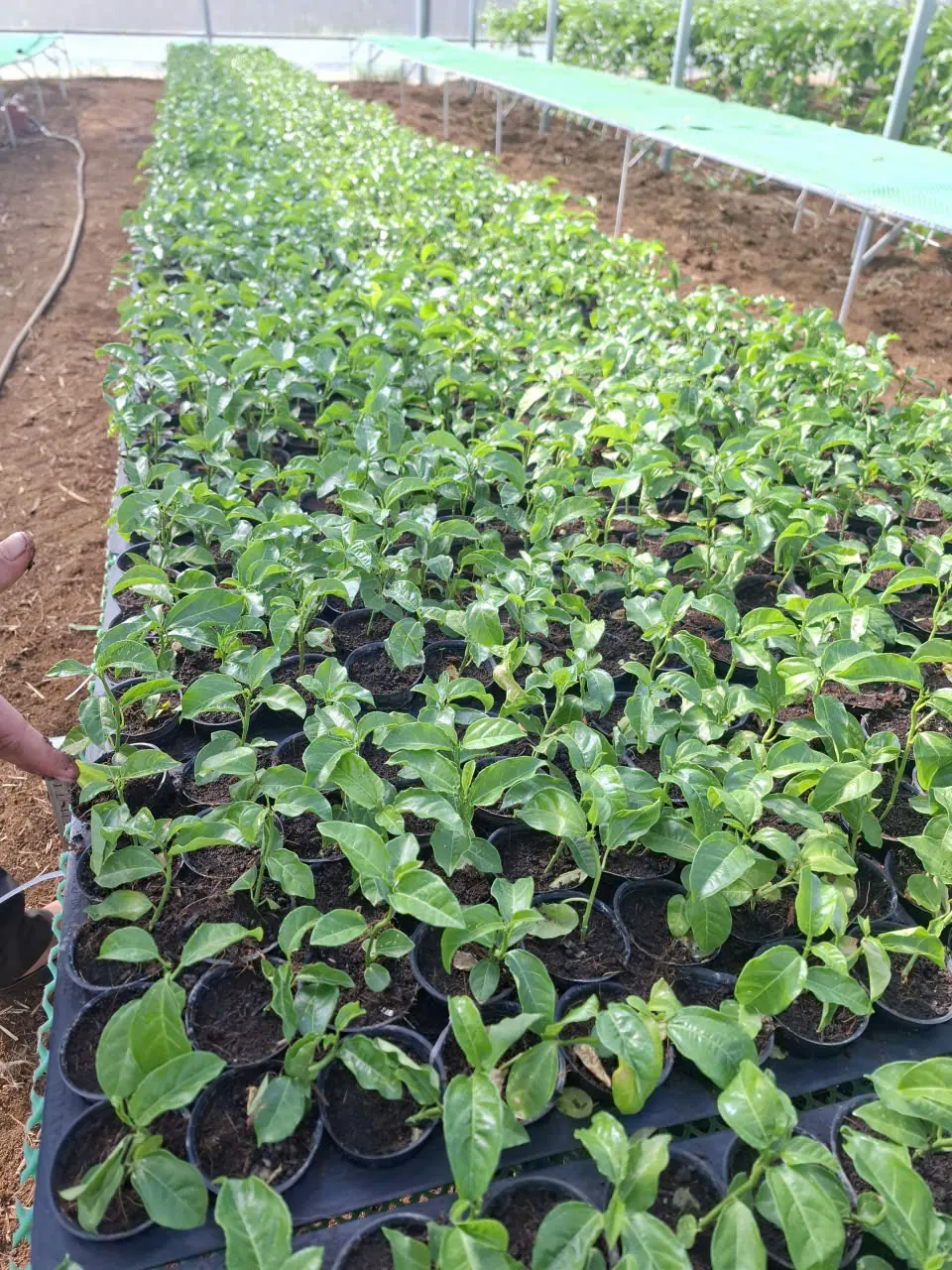 Passion fruit seedlingsRaised in our own greenhouse nursery.
 PeanutsGrown in rotation on red basalt soil.
We are studying coffee and chili as our next crops on the highlands. They are not yet available; partners interested in future supply are welcome to talk with us early.
The road ahead
“Every fruit has an address.”
Clean passion fruit from Vietnam’s red basalt highlands
03 How we grow
Every vine on our farm starts in our own greenhouse and ends in a crate we pack ourselves.
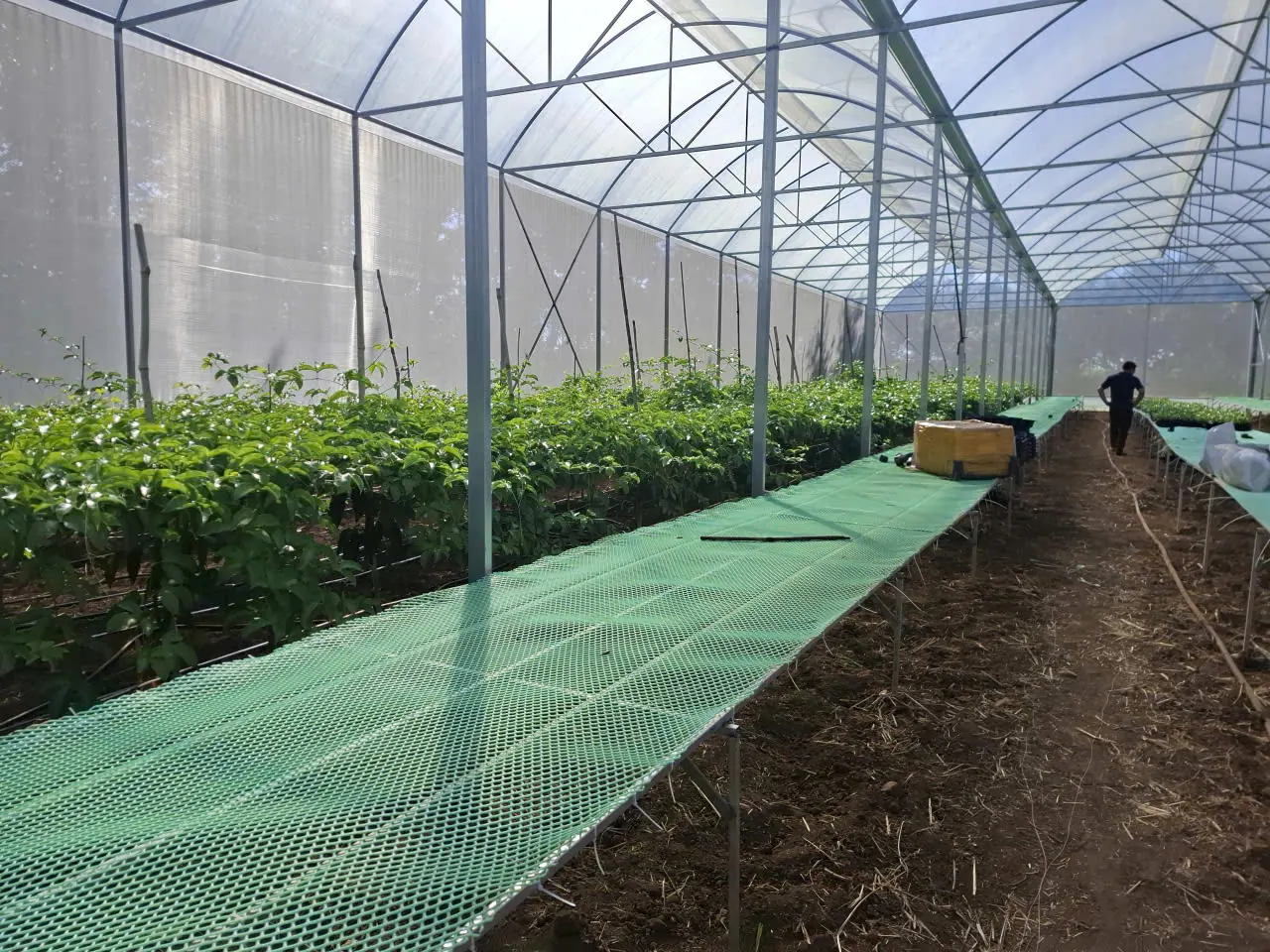
Seedlings are raised in trays on raised benches under net and film, protected from heavy rain and pests.
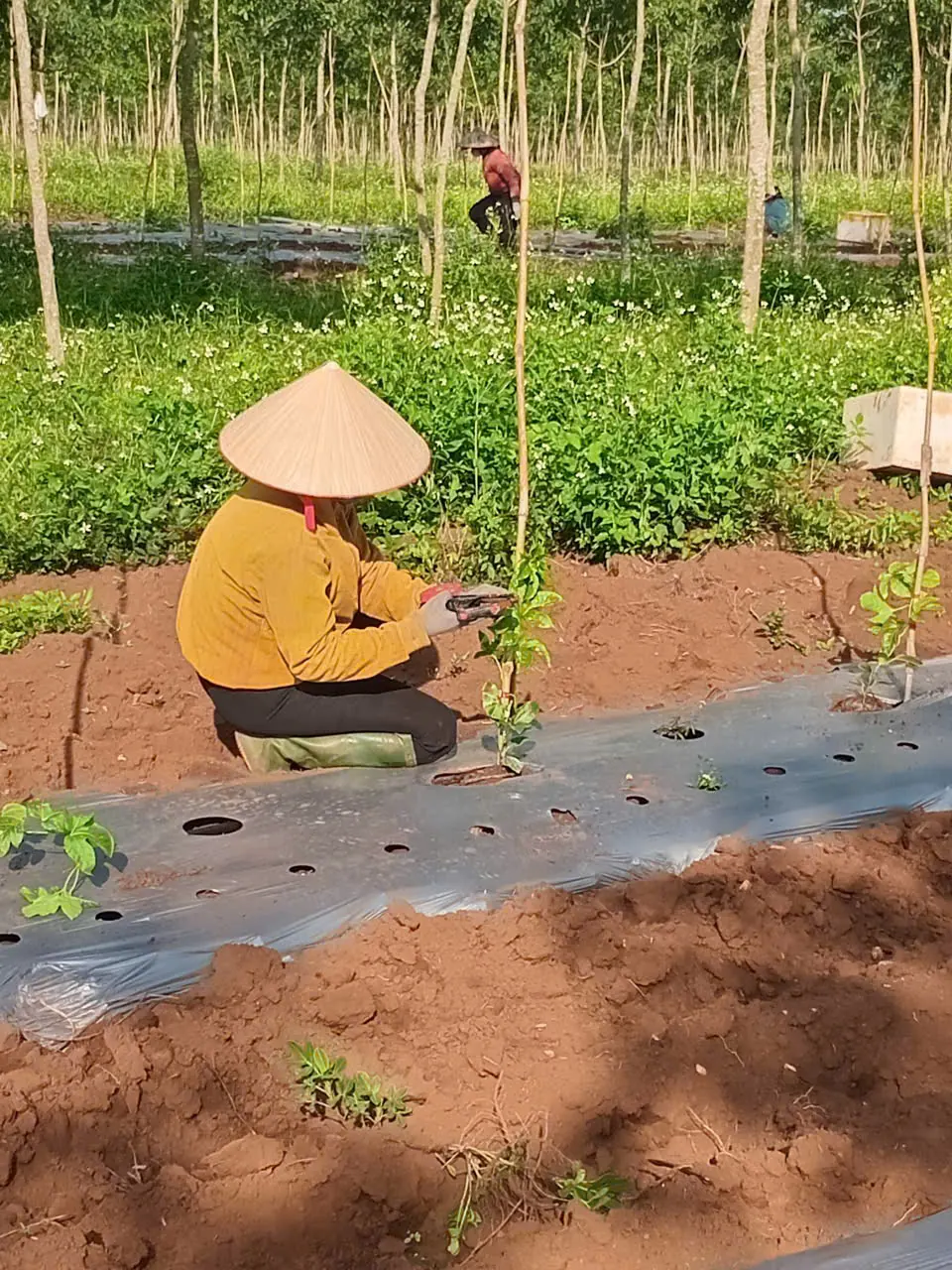
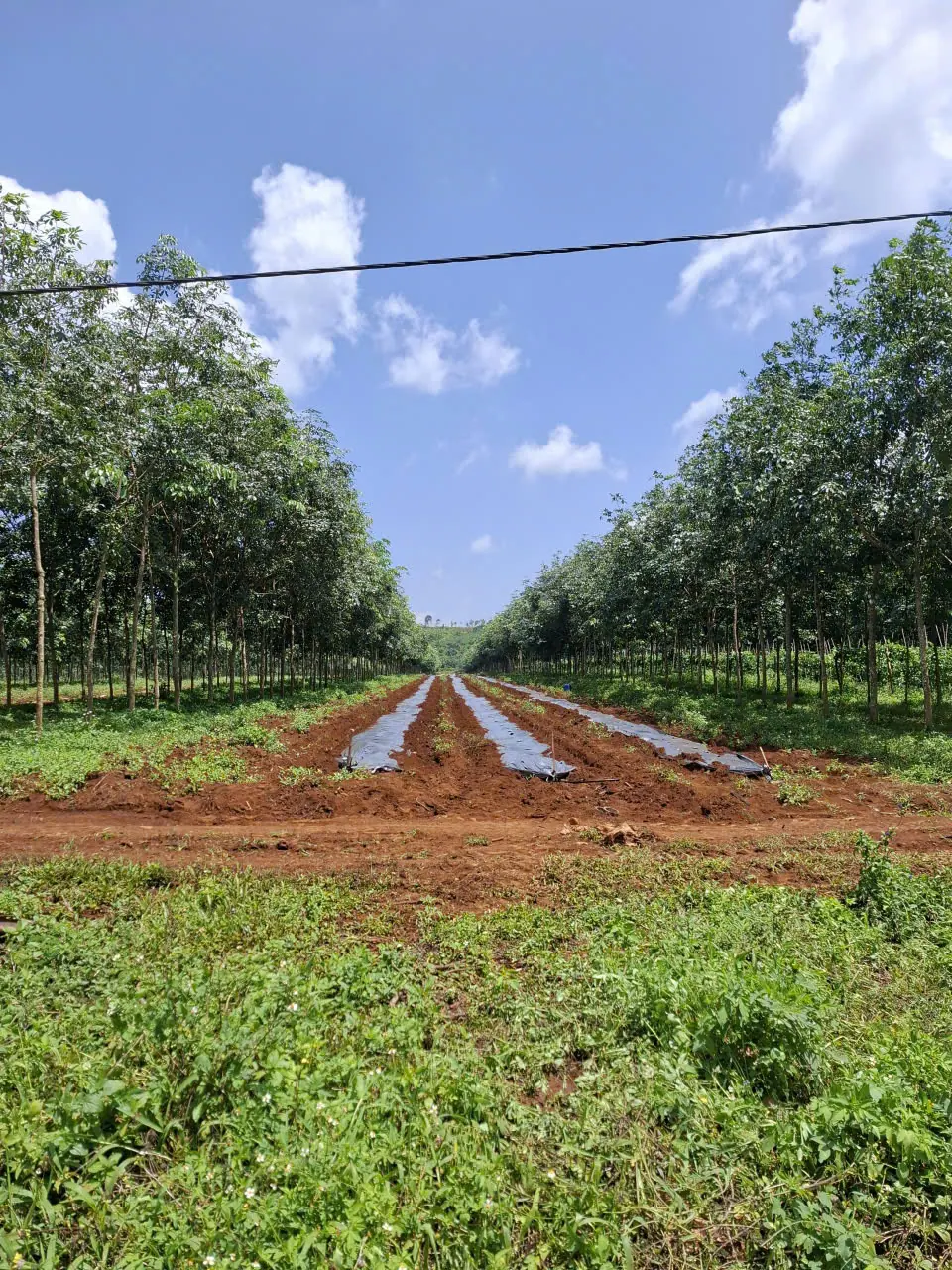
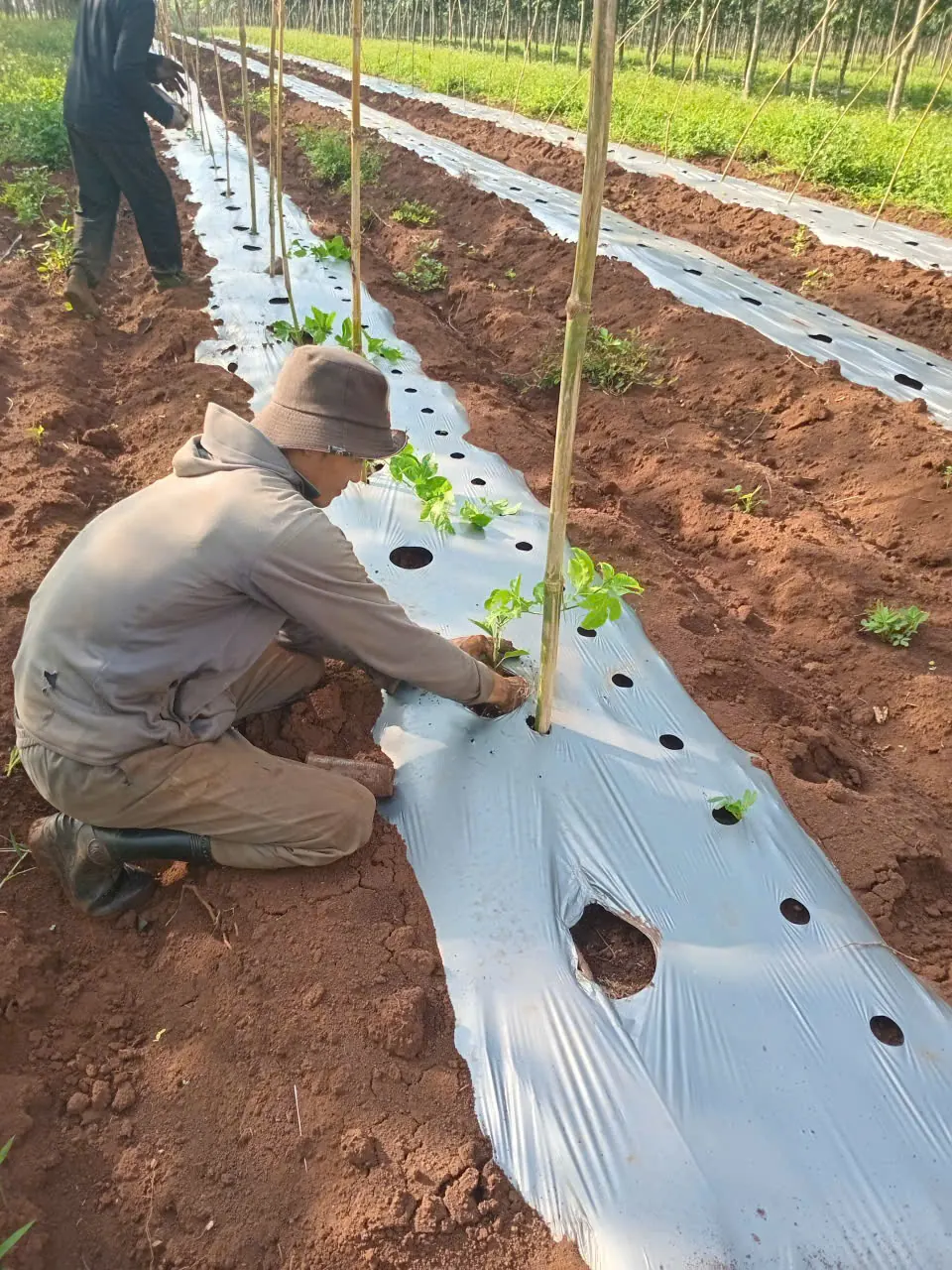
Rows are shaped in the basalt soil and covered with mulch film to keep moisture in and weeds down.
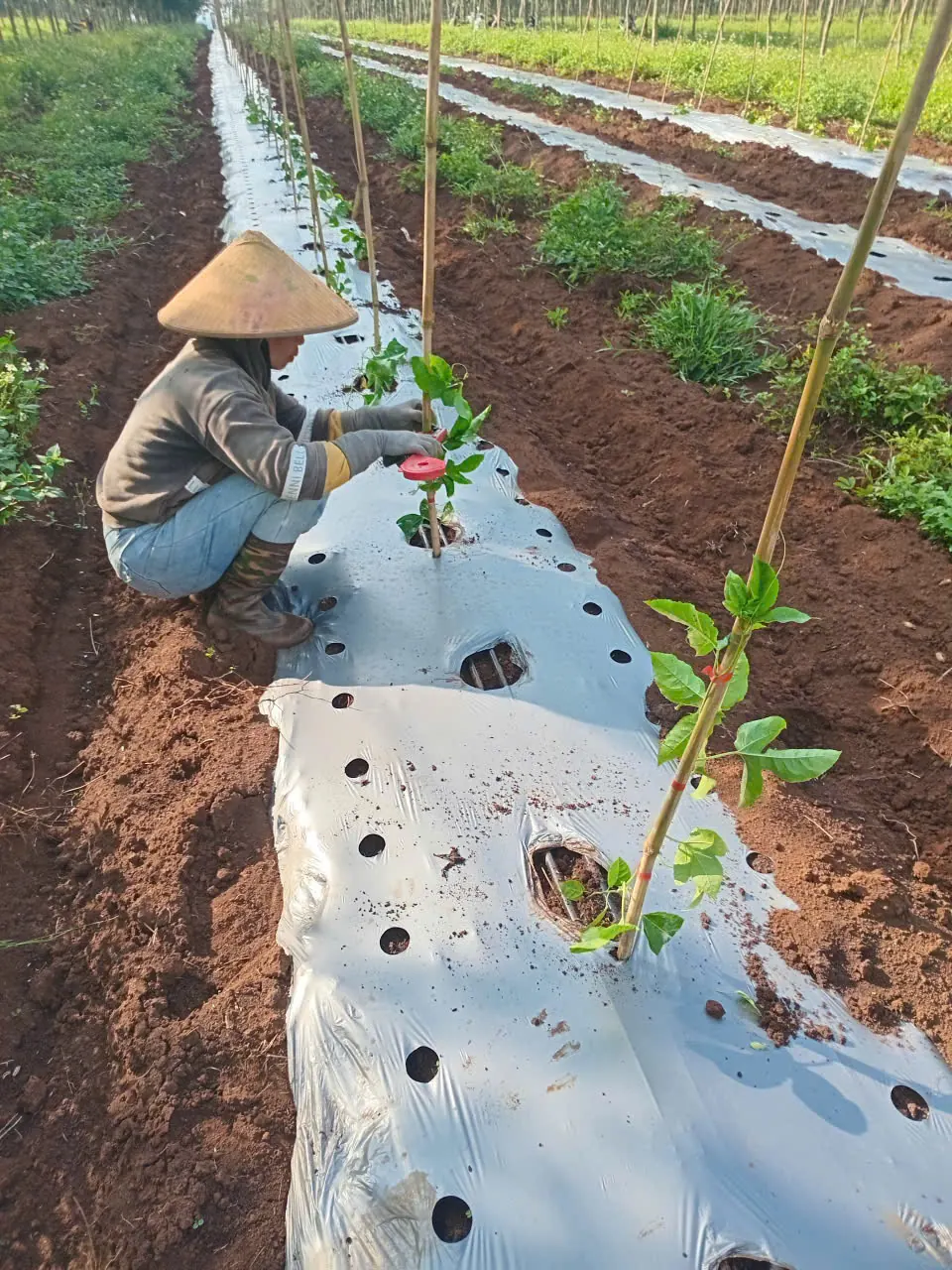
Each seedling is planted by hand through the film, beside its own bamboo stake.
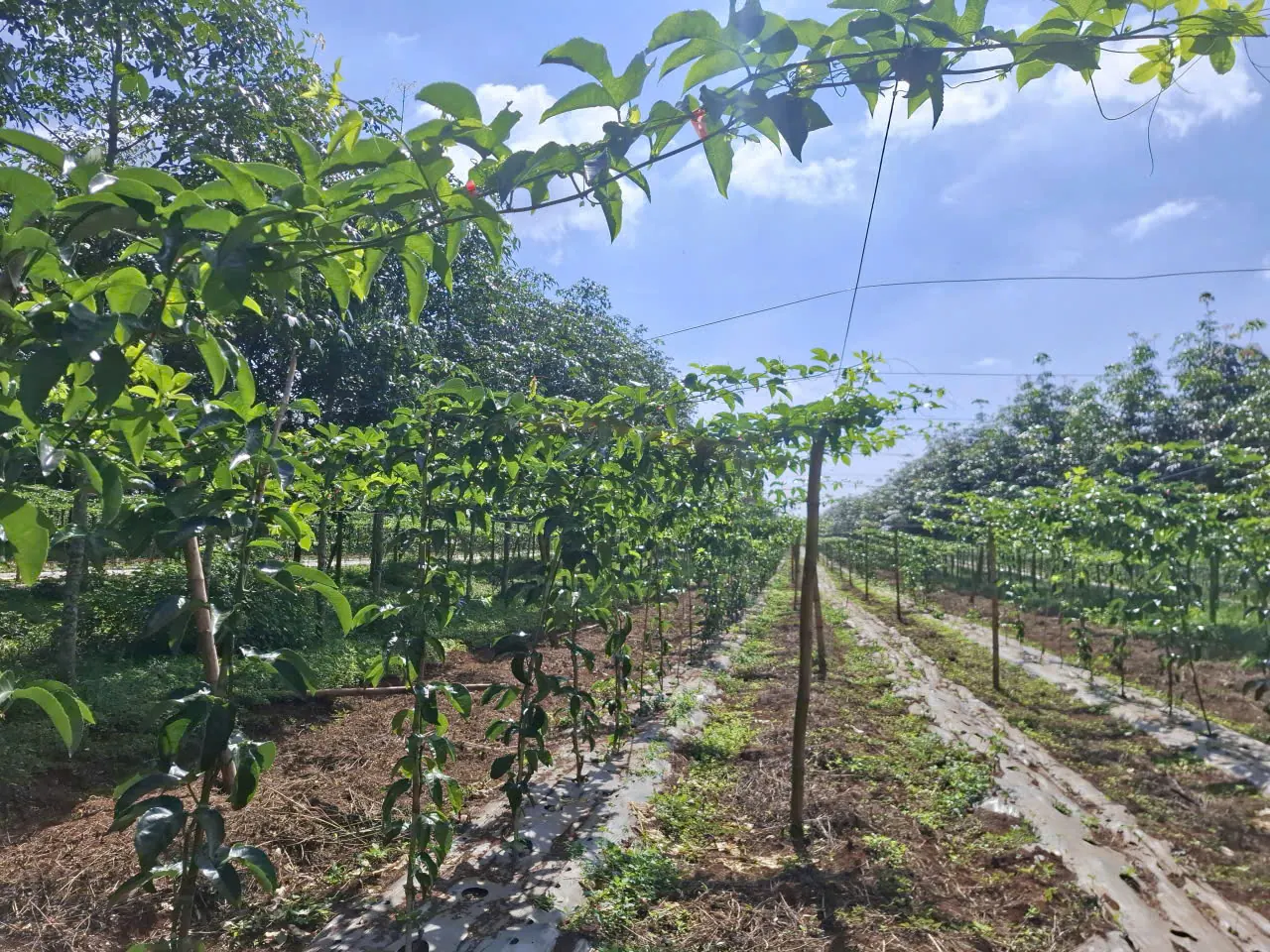
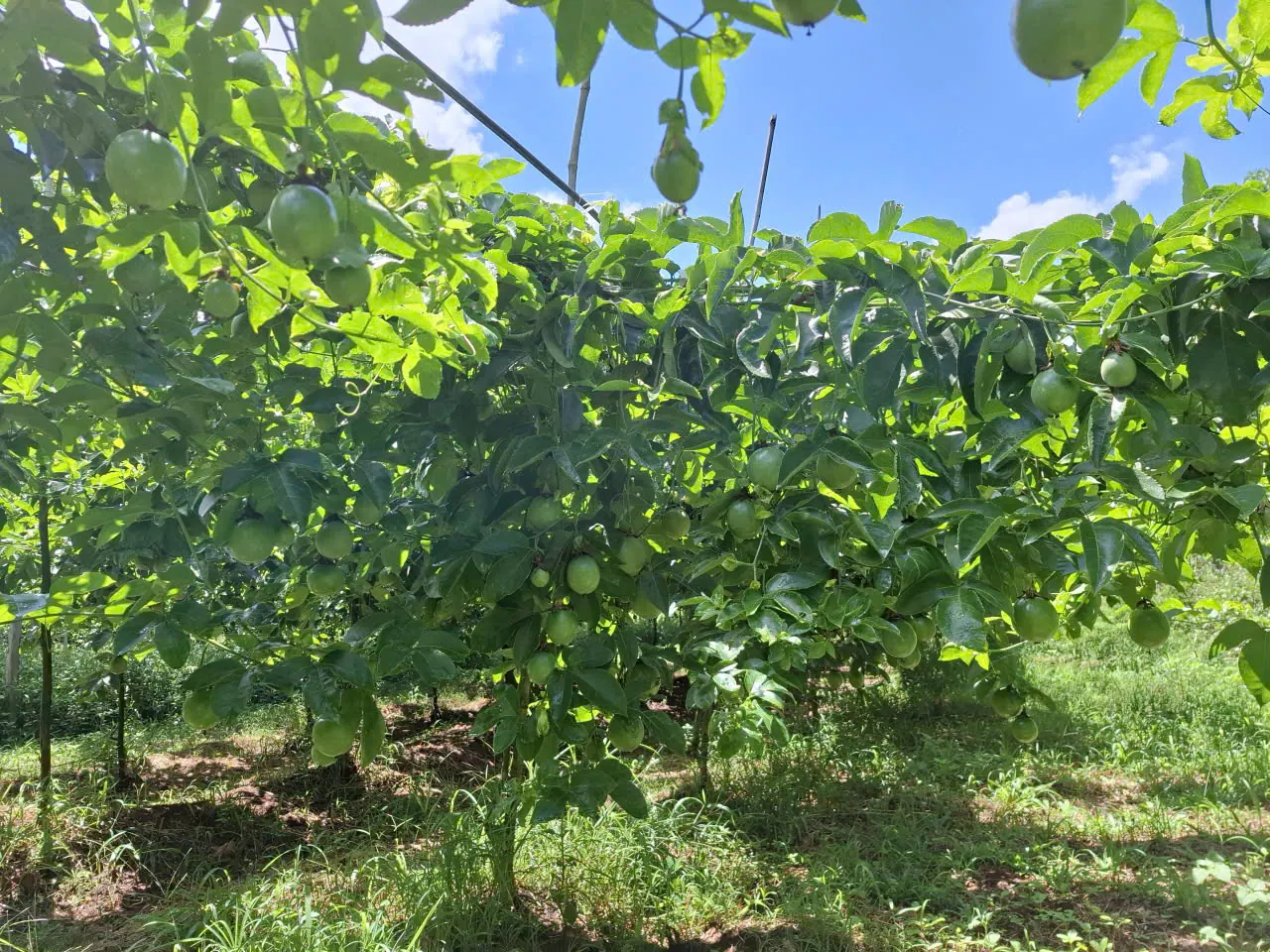
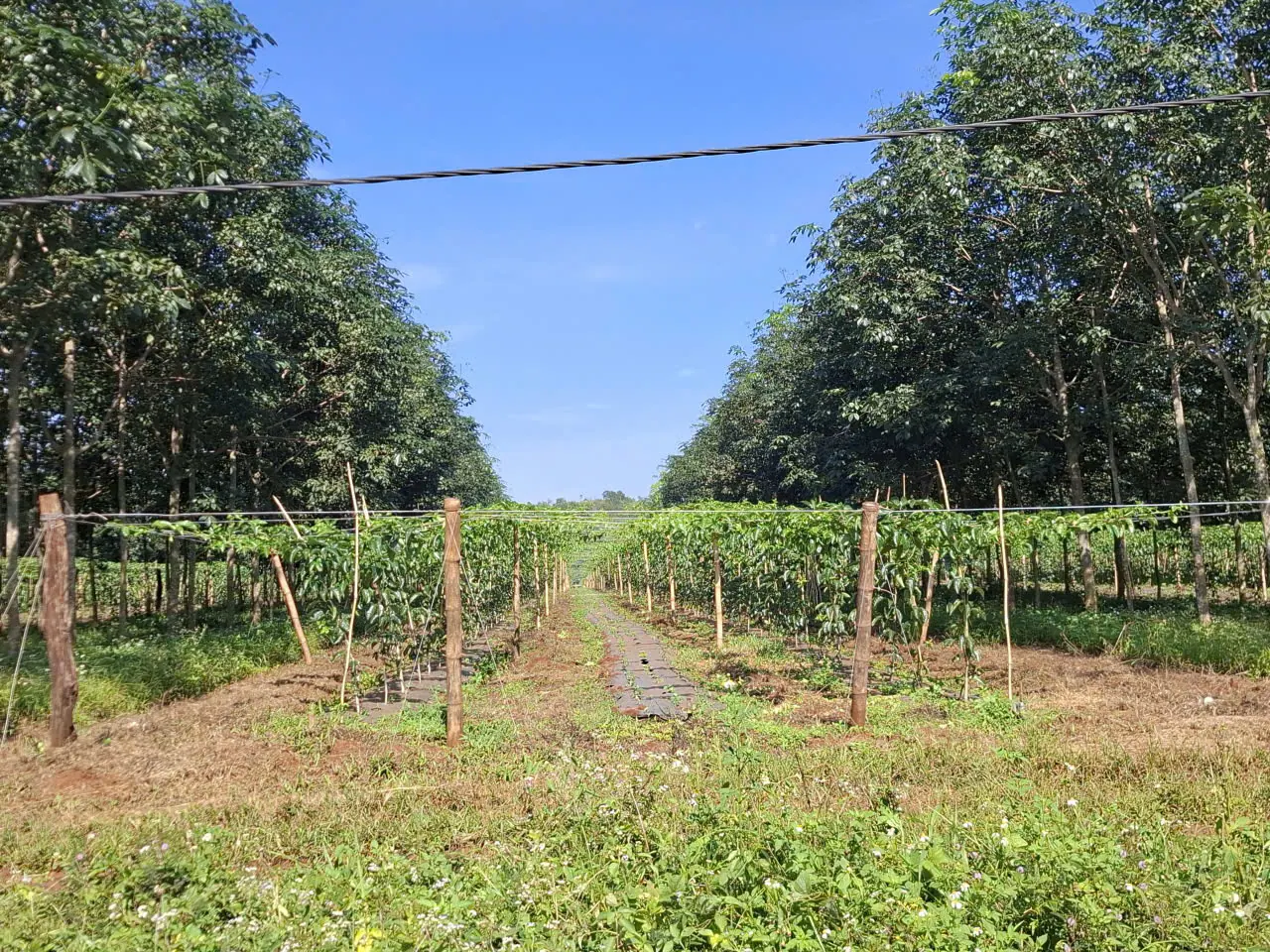
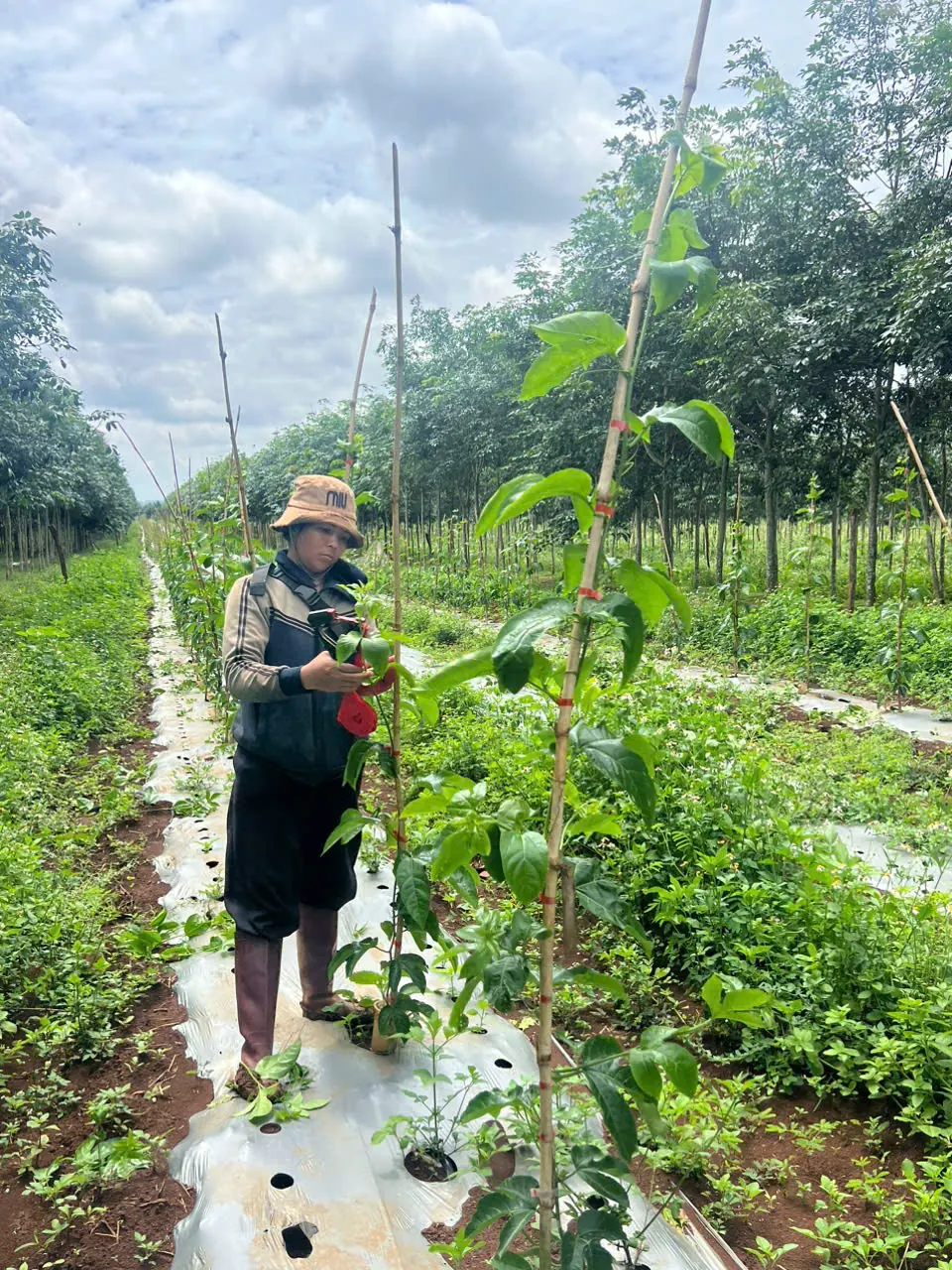
Vines climb a trellis of posts and wire. Drip lines deliver water and nutrients to each plant.
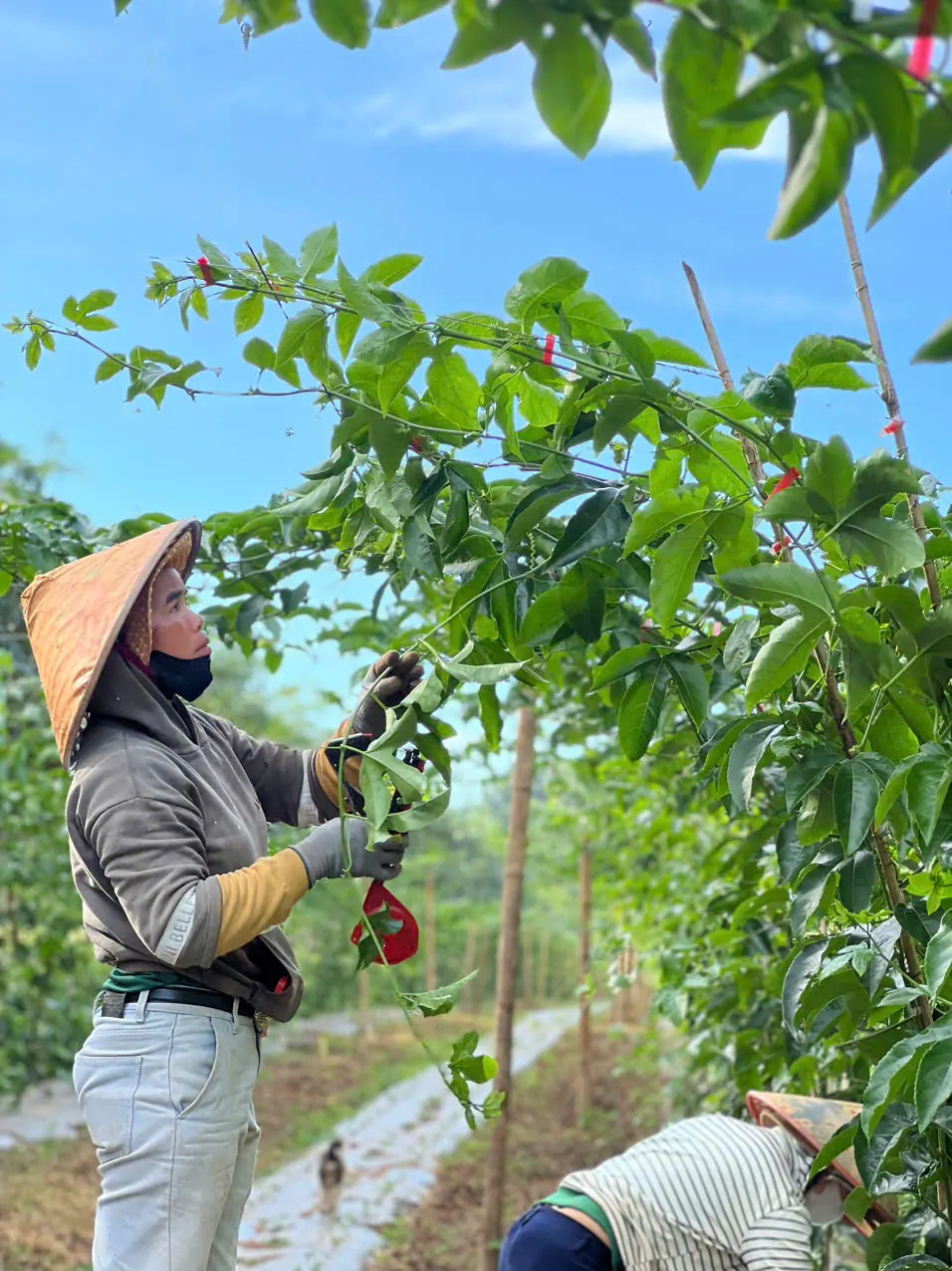
Our team trains and prunes the vines and keeps records of the work in every growing lot.
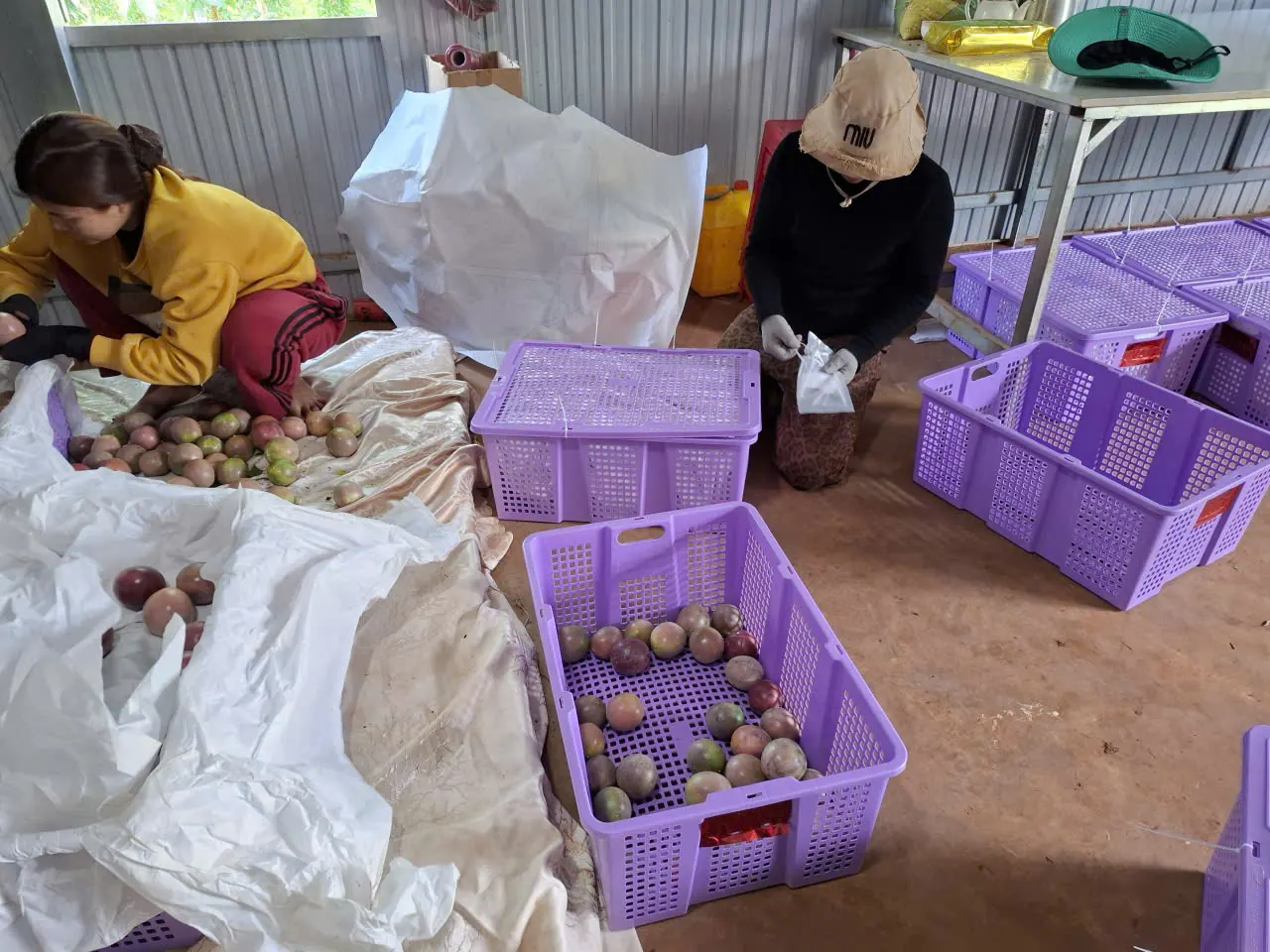
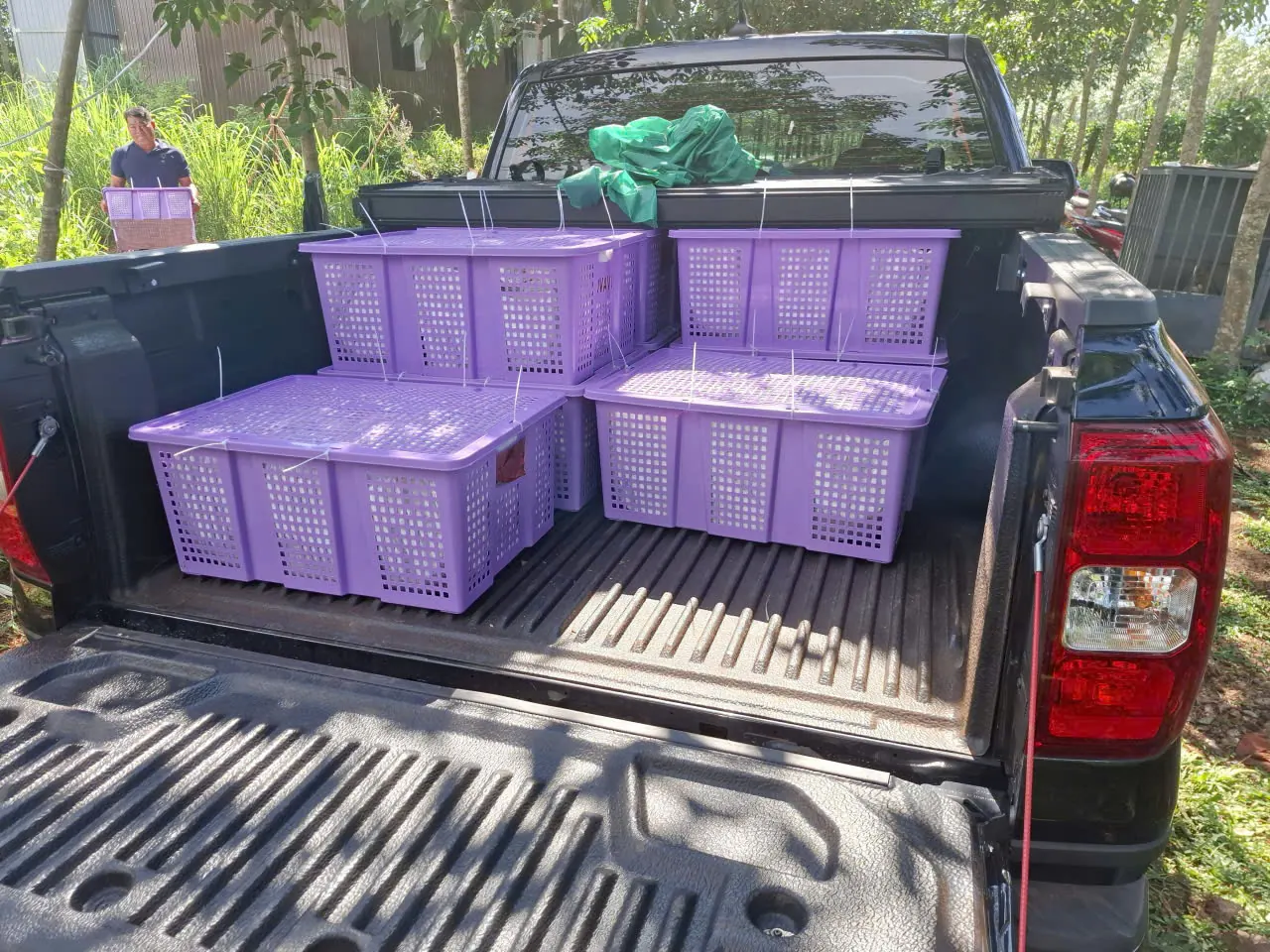
Fruit is picked at maturity, sorted by hand and packed into clean crates on the farm.
04 Clean farming
For us, clean agriculture is not a label. It is a set of daily habits we can show you in the field.
We raise our plants in our own greenhouse nursery, so we know where every vine comes from.
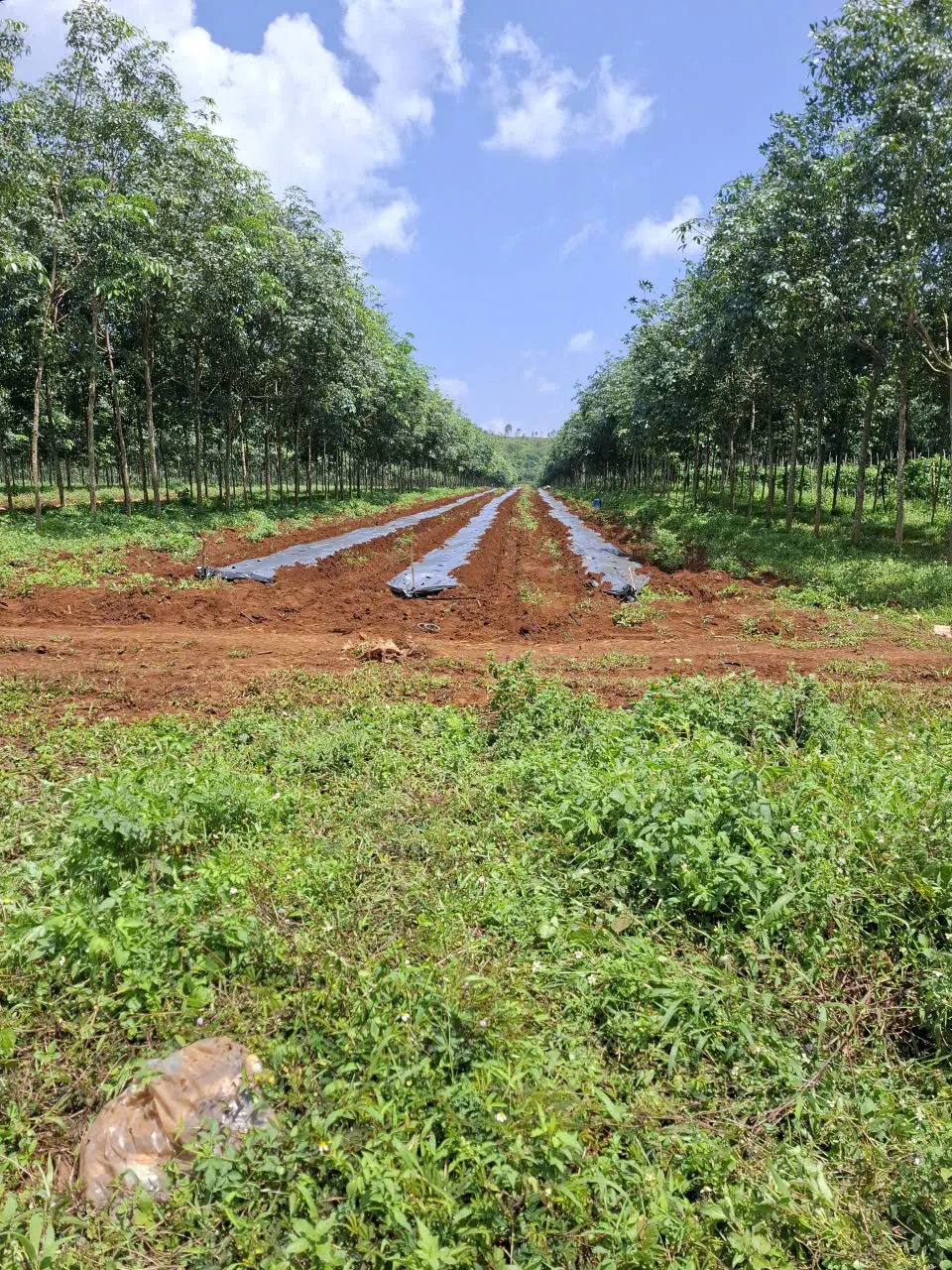
Drip irrigation gives each plant what it needs and nothing is wasted.
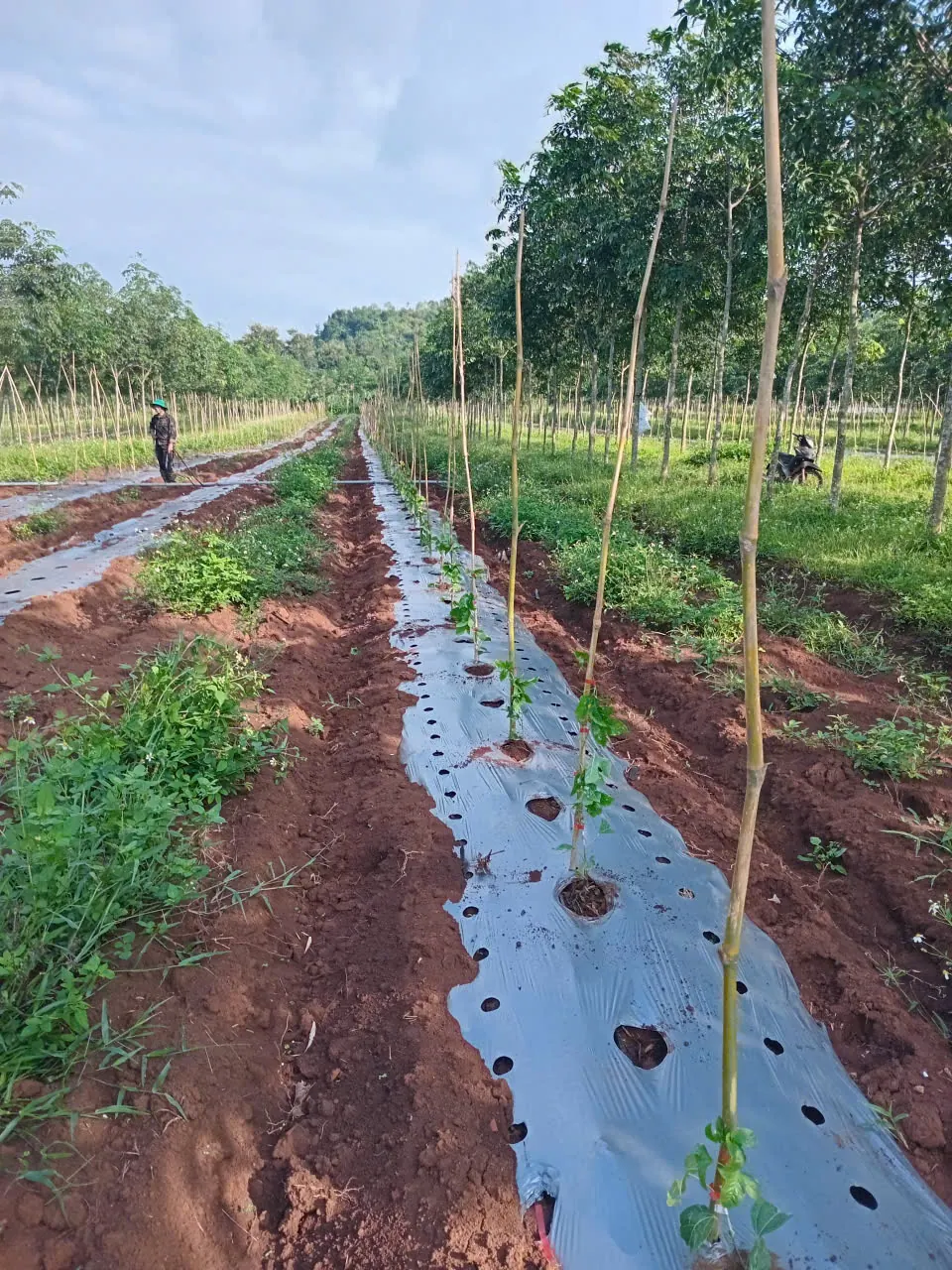
Microbial fertilisers are part of our soil programme, alongside balanced nutrition.
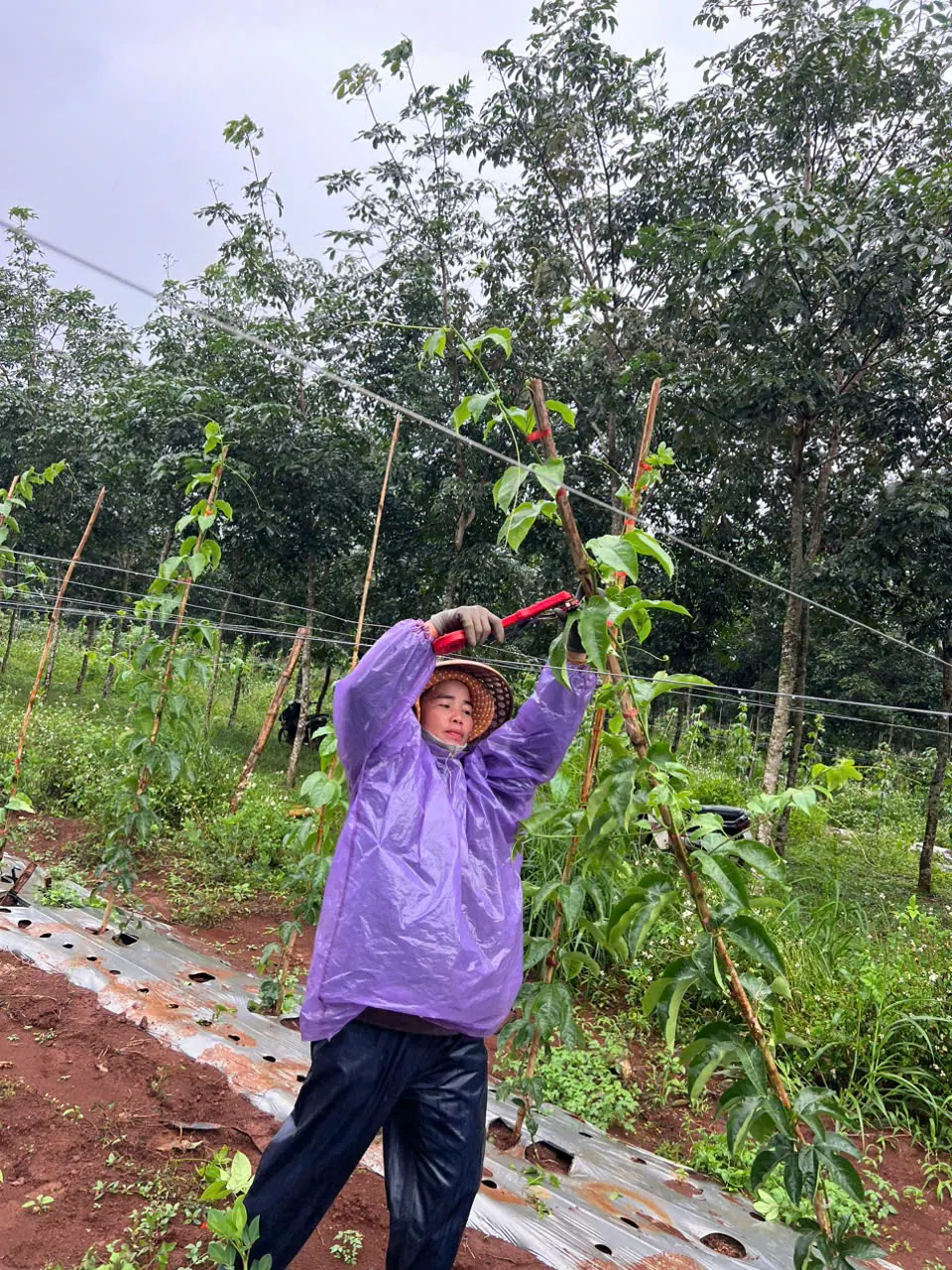
Work, inputs and harvests are recorded by growing lot in our farm management system.
05 People & farmers
A farm is, first of all, its people.
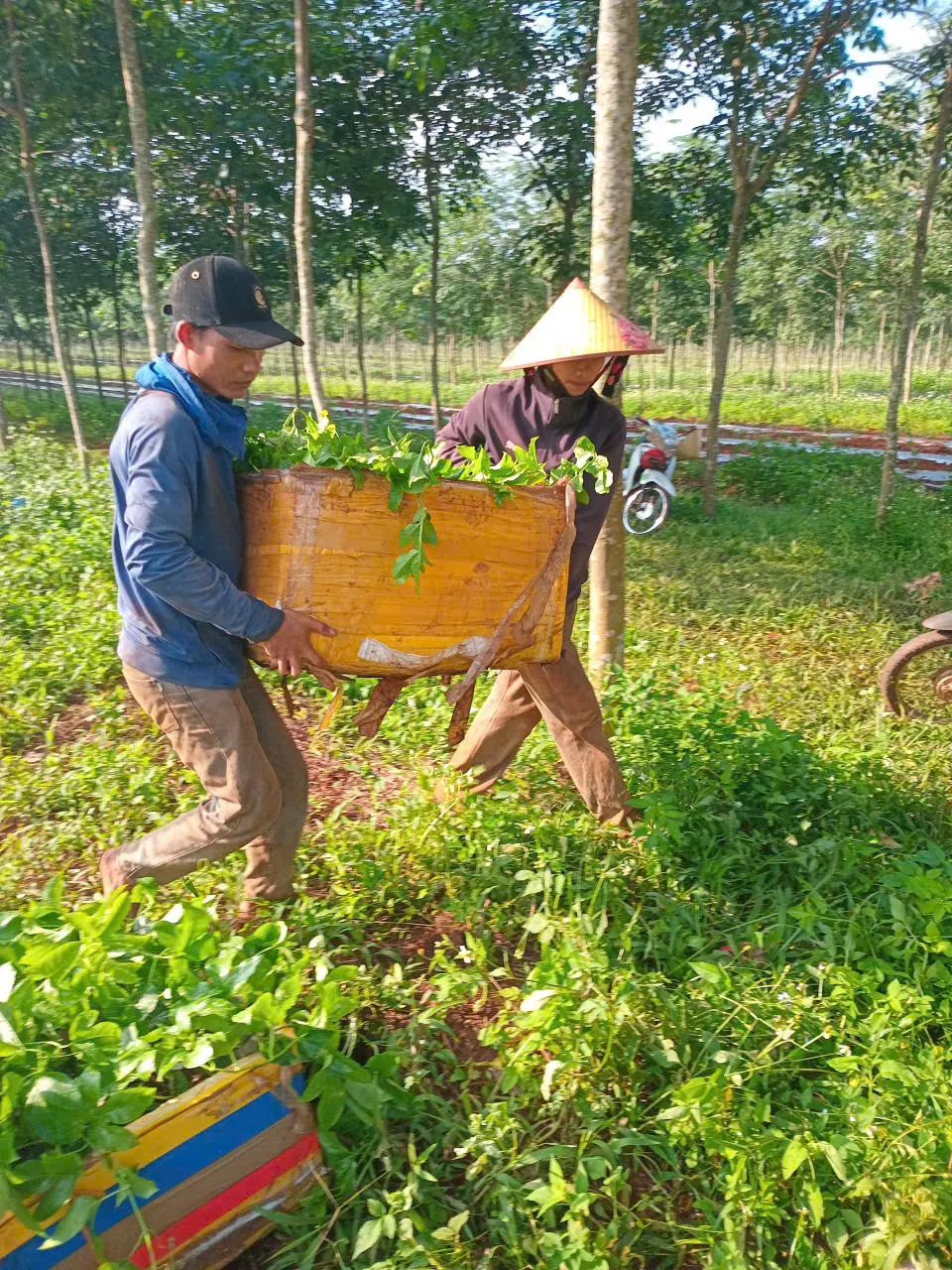
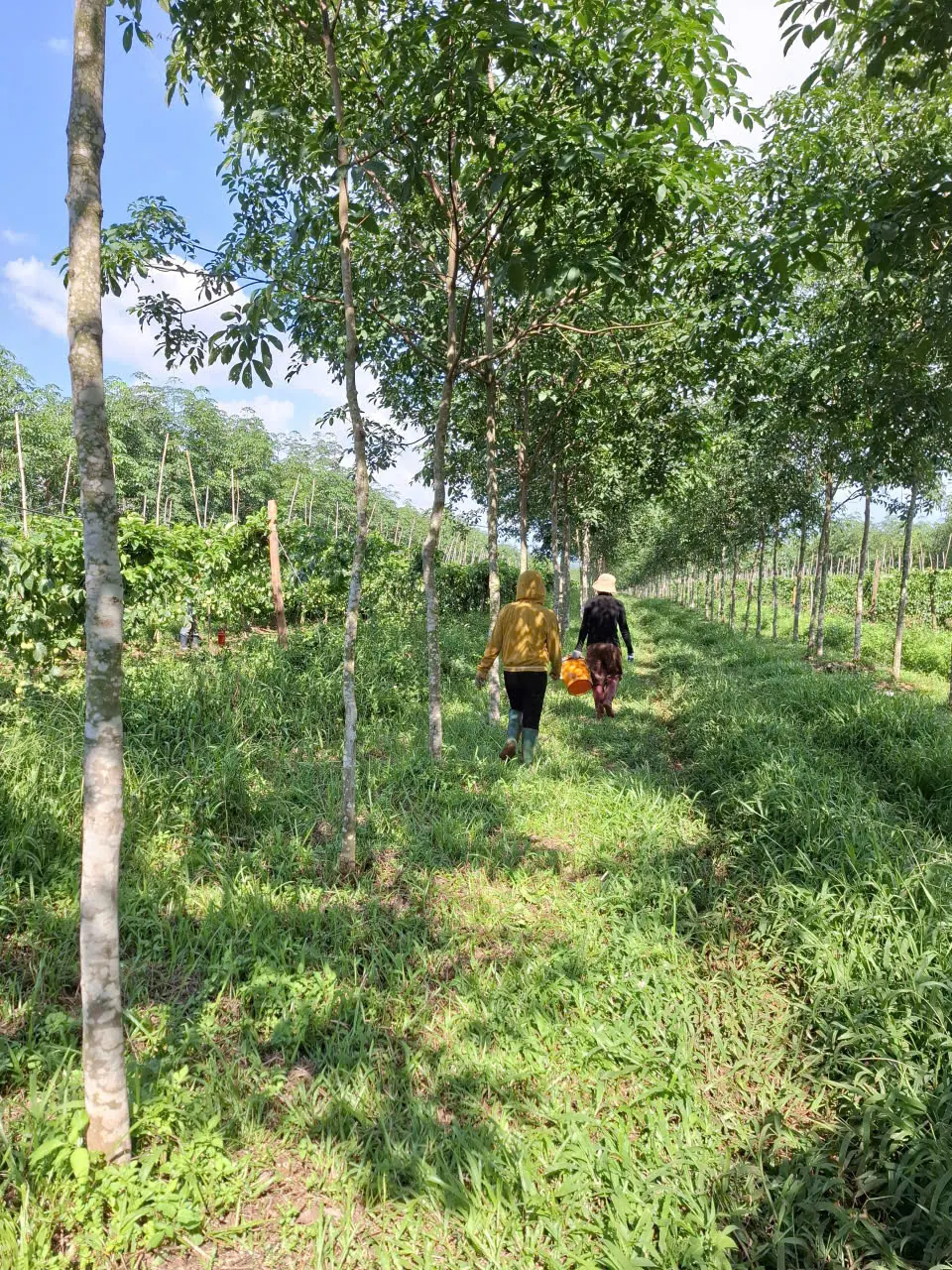
Every post on our trellises, every seedling in the field and every crate of fruit has passed through the hands of the people who work here — men and women from the communities around our fields, who know this red earth and its seasons better than anyone.
They plant by hand, train and prune the vines, mend the trellis after the rains and pick each fruit at the right moment. In the greenhouses they care for the seedlings tray by tray. Their skill is what turns good soil into good fruit.
Each working day is recorded in our farm system, so the work behind every harvest is visible. As the farm grows, we want to grow together with the people who built it — through steady work, shared know-how and new crops such as coffee and chili.
Our field team comes from the area around the farm.
Greenhouse and field methods are shared and improved season by season.
Every working day is recorded in our farm system.
07 Global standards
Buyers in different markets follow different rules. These are the standards most often asked about for fresh fruit — and how we approach them.
The international standard for good agricultural practice on farms, widely requested by importers and retailers.
Vietnam’s national standard for good agricultural practice, covering safety, traceability and working conditions.
Organic rules such as EU Organic, USDA Organic and Japan’s JAS set strict limits on inputs and require a conversion period.
HACCP and ISO 22000 manage hygiene and food-safety risks in harvesting, packing and handling.
Each market sets maximum residue limits for crop-protection products — from Codex Alimentarius to the EU, Japan and Korea.
Shipments need a phytosanitary certificate under the international plant protection rules (IPPC).
Some markets, such as China, require registered growing-area and packing-house codes for fresh fruit.
For our future coffee, programmes such as Rainforest Alliance and 4C are common buyer requirements.
Our approach: we farm and keep records with these standards in mind from the very first season, so our partners can build on a clear foundation.
08 Partner with us
We are building a transparent, export-ready supply of Vietnamese highland fruit. We welcome importers, distributors and growers who want to grow with us from the start.
Importers, distributors, wholesalers and growers looking for seedlings.
Product, grade and size, packing, volume, harvest timing and the documents your market requires.
Every enquiry is answered by the farm team. Terms are agreed in writing before any supply.
This site is available in English, Vietnamese, Chinese, Korean and Japanese.
09 Farm gallery